Waste valorisation plant Winterthur
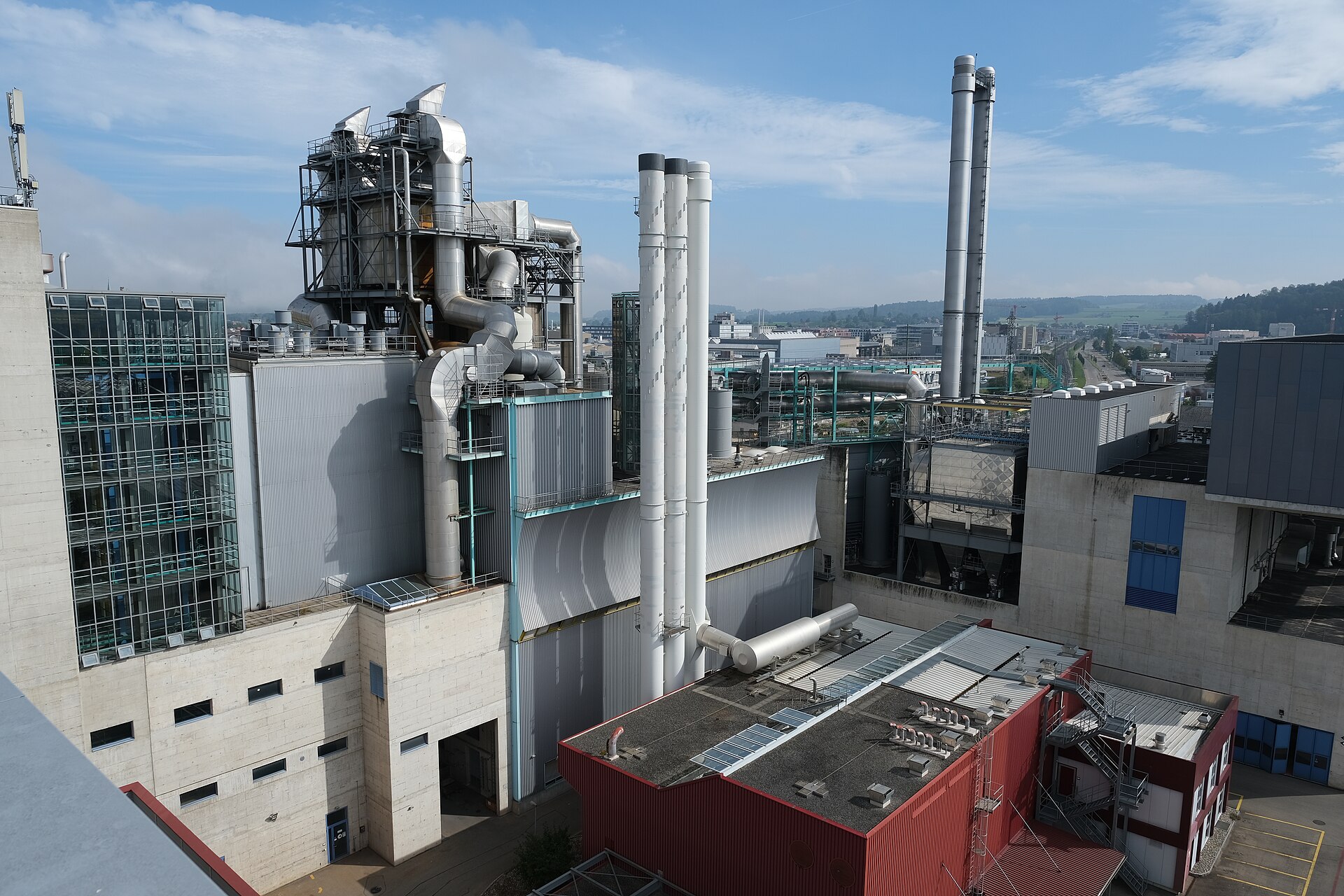
I was recently invited to visit the Kehrichtverwertungsanlage in Winterthur, Switzerland. Here are some insights from my visit.
Introduction
The city of Winterthur, Switzerland currently gets around 20% of its electricity and 15% of its heat from a trash incineration plant.
A recently approved renovation by public vote (87 percent yes) will upgrade the plant to handle 30% of the city’s heat needs with the same amount of trash (190,000 tonnes per year) as well as improve the filtering capacity to under 40% of the legal limits. Additionally, the recovery of 7.5 tonnes of gypsum (a large part of the trash burned is from industry, household trash does not usually contain gypsum) per day will be made possible in addition to the current recovery of metals.
Video walk-through
Where the trash comes from
The trash comes from a variety of sources. The following pie chart shows the distribution of the trash. The numbers are percentages of the total trash.
pie
    "City and surounding towns" : 23
    "Other regions" : 5
    "Direct from ZAV Inland" : 42
    "Direct from ZAV Abroad" : 16
    "Direct area Winterthur" : 7
    "Hazardous waste": 7
ZAV an organisation made up of several plants to collectively plan where what is burned. So for example if one plant is doing renovations the trash is sent to another plant.
16% of trash comes from abroad (Germany) because the KVA is closer to those German towns than the closest plant in Germany. Due to regulatory differences, the slag produced will be taken back by Germany.
Majority of the trash burned comes from industry, hence the large amount of gypsum. This is also because Winterthur used to be a large industrial city.
How it works
There are several stages in the plant. The trash is received in a giant bunker and then fed into the incinerator’s hopper. During the burning process, the heat is used to generate steam which is used to generate electricity and heat. The ash and dust are filtered out of the exhaust gas using a series of filters in four stages.
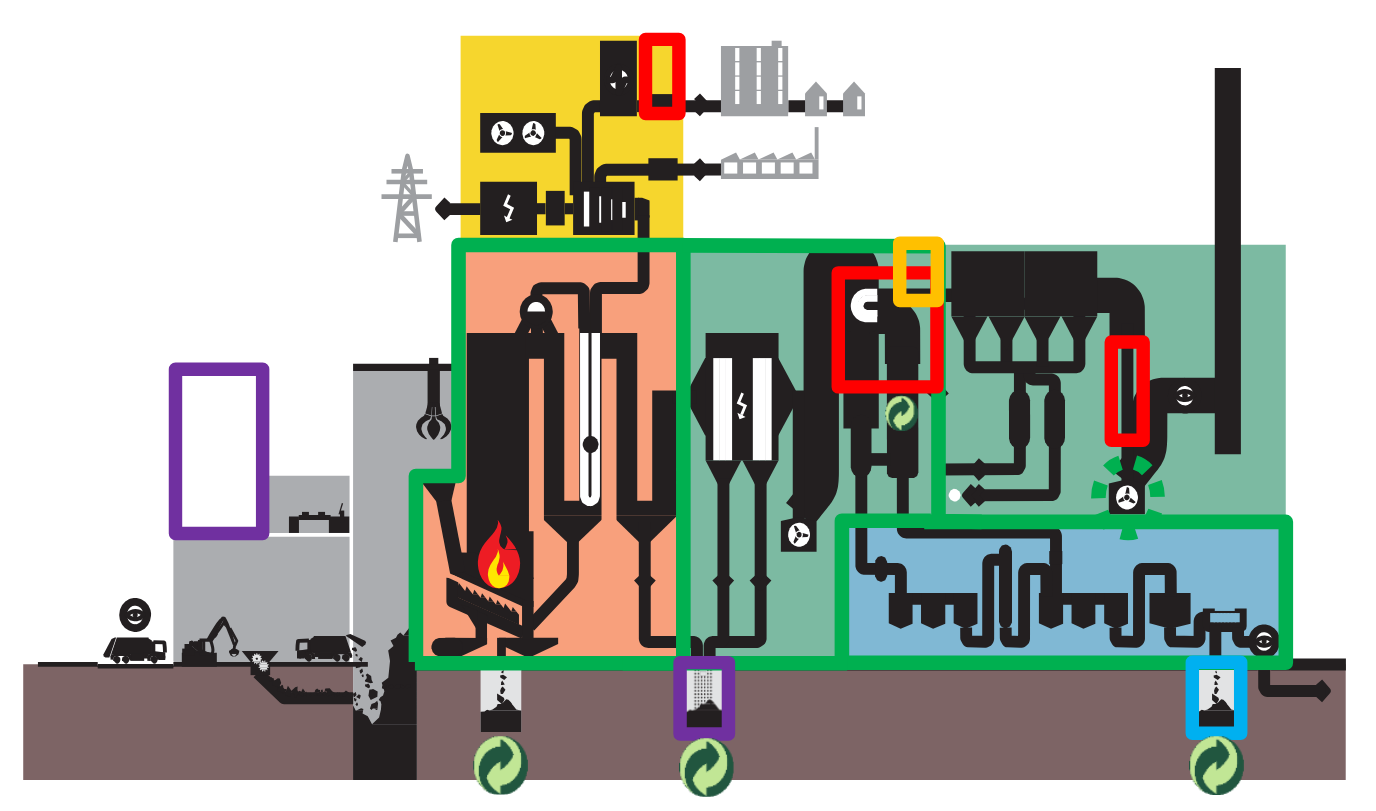
The incinerator
The incinerator is a slanted style continuous buring plant. The trash is fed into the top of a very large hopper which seals the incinerator at the top. Moving teeth move the burning trash slowly down the slope. The trash is burned at around 950 degrees Celsius.
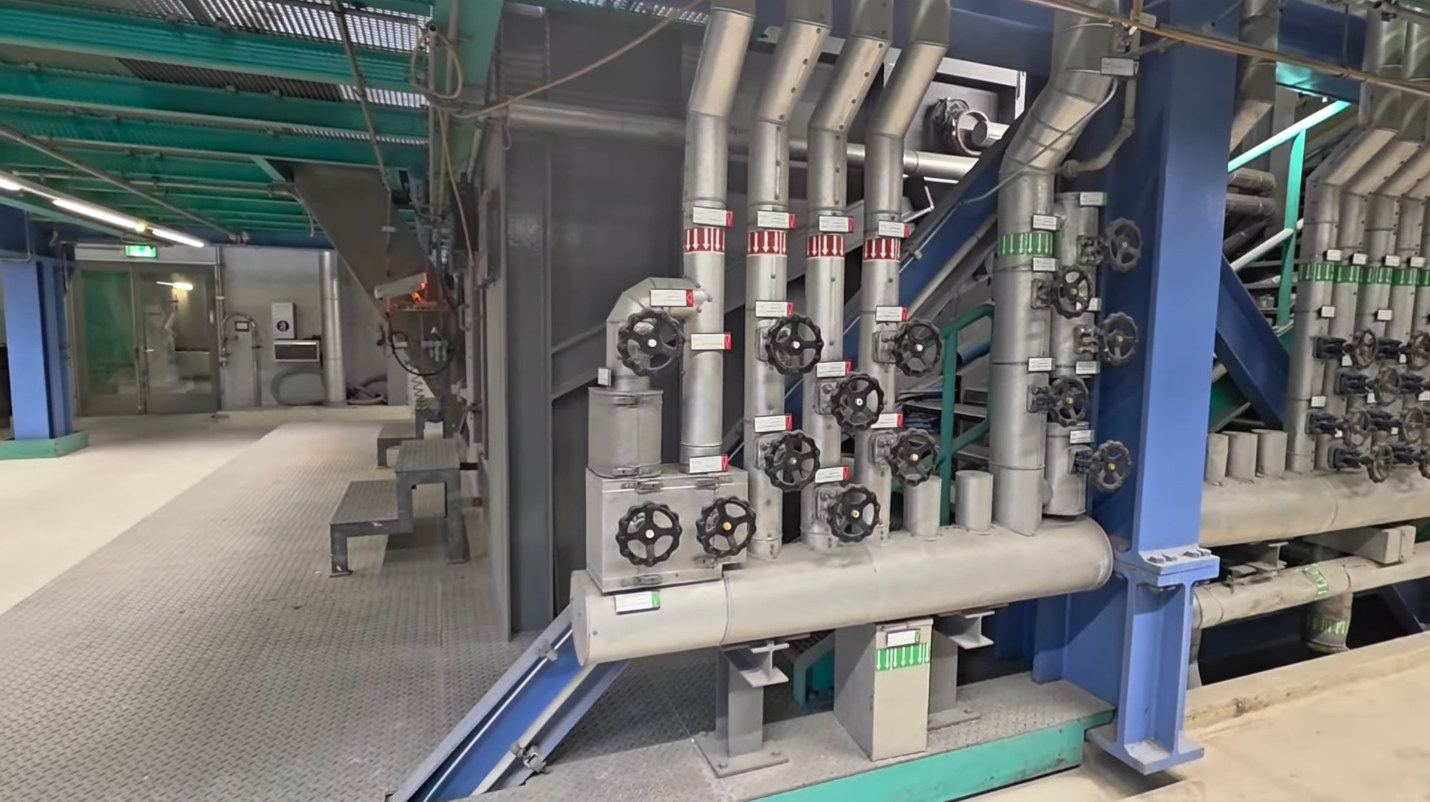
The fire is controlled purely by airflow which is pulled from the trash bunker. This causes a low pressure area in the bunker preventing trash smell in the surrounding areas.
No fuel or gas is used to burn the trash, it is self sustaining.
Slag
Slag is what is left over after the burning process which is around 18–20% of the input. This goes on to other facilities to remove additional materials, usually metals. The Swiss legal limit of remaining metal is 1%, slag in Zürich is processed to well below that at around 0.3%.
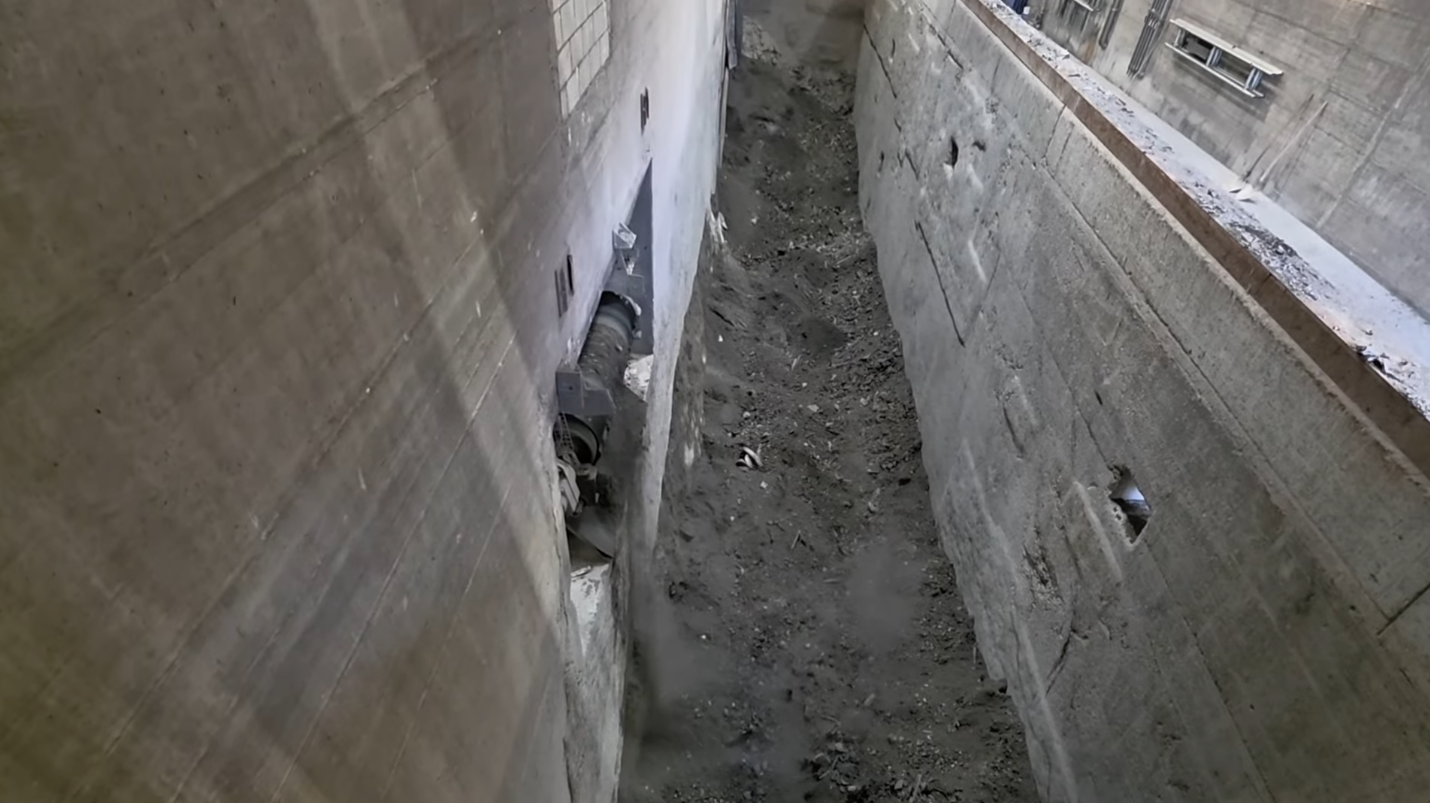
The remaining slag is then usualy sent to landfills.
The company SELFRAG has opened a facility in 2023 that can process slag down to 10-11% of the original volume. This is done by crushing and then using a magnetic field to seperate the remaining iron.
Electricity and Heat Generation
The sides of the incinerator are lined with pipes that absorb the heat from the burning trash. The heat is then used to generate steam which is used to generate electricity and heat.
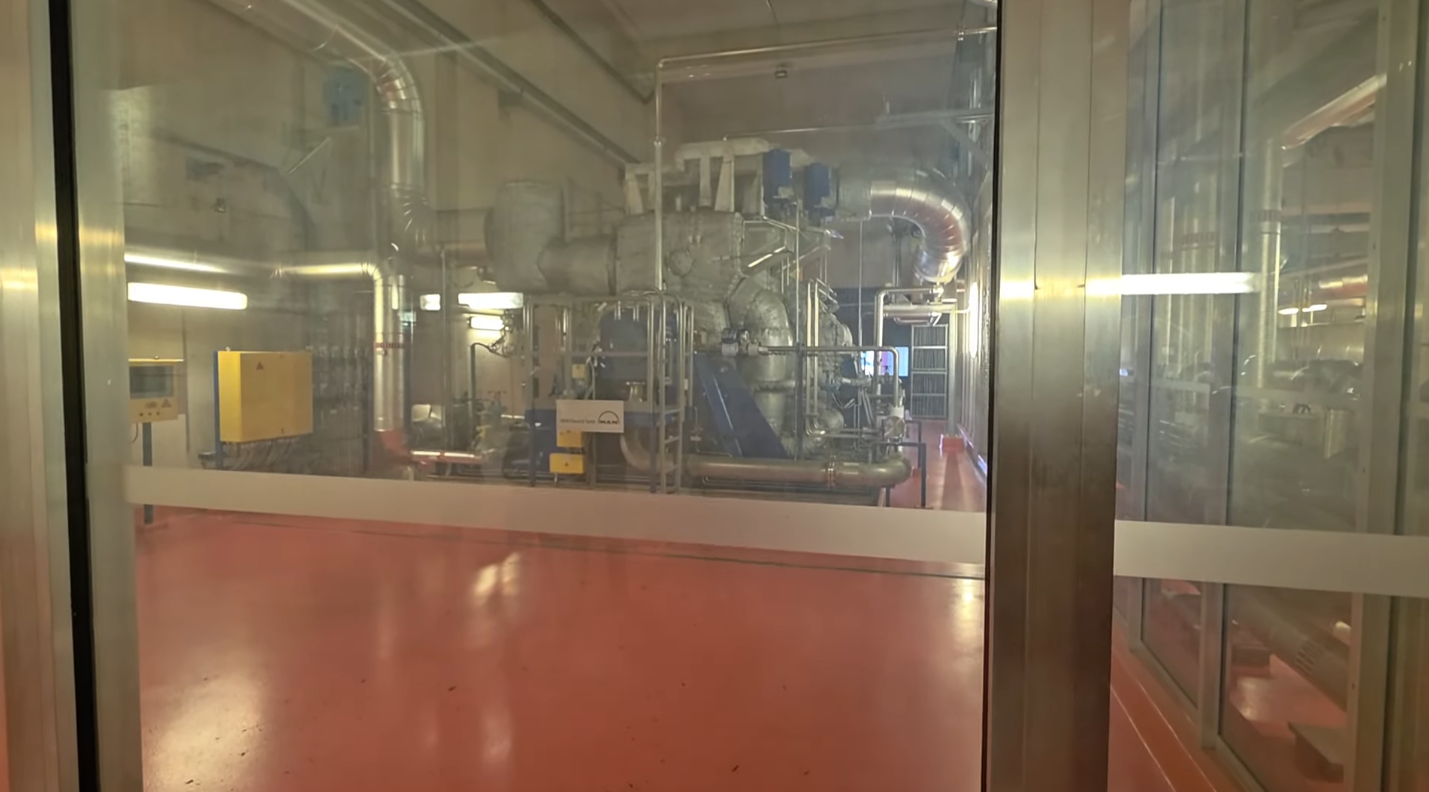
The KVA Winterthur currently produces around 22 MW of electricity and 97 MW of heat.
Filtering
Unlike many plants in other countries this plant processes exhaust gases through four stages of filtering in an effort to remove as much pollutants as possible. This involves electrostatic filtering, washes and physical filters. Various processes are used some of which require water and the addition of chemicals.
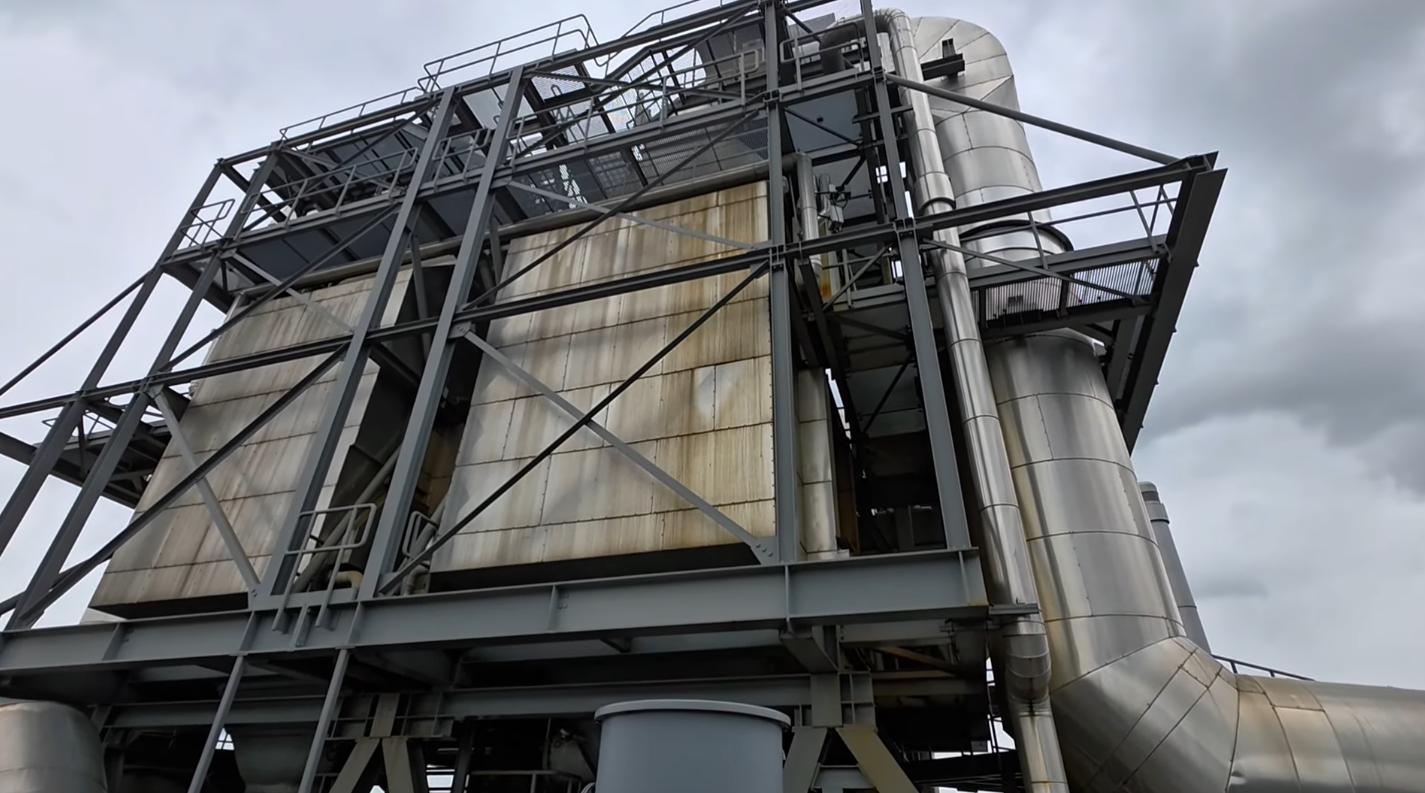
The remaing CO₂ is sent out the 60m tall chimney.
At this time no CO₂ capture is done and is also not planned with the current renovation.
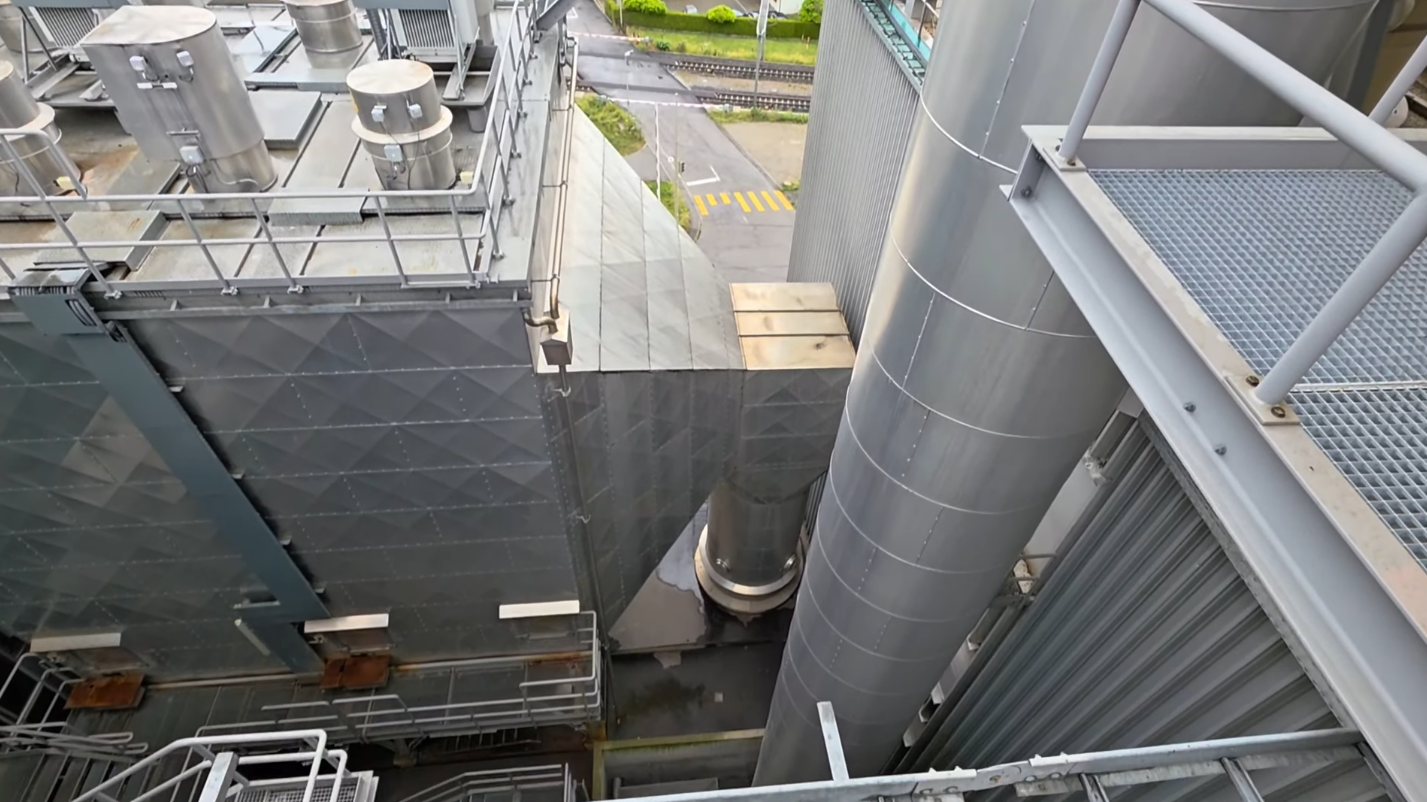
There are some other plants looking into CO₂ capture and storage but the primray issue is where to put the captured CO₂.
Water treatment
The water used is pre-cleaned before being sent to the city water treatment plant.
The Fence
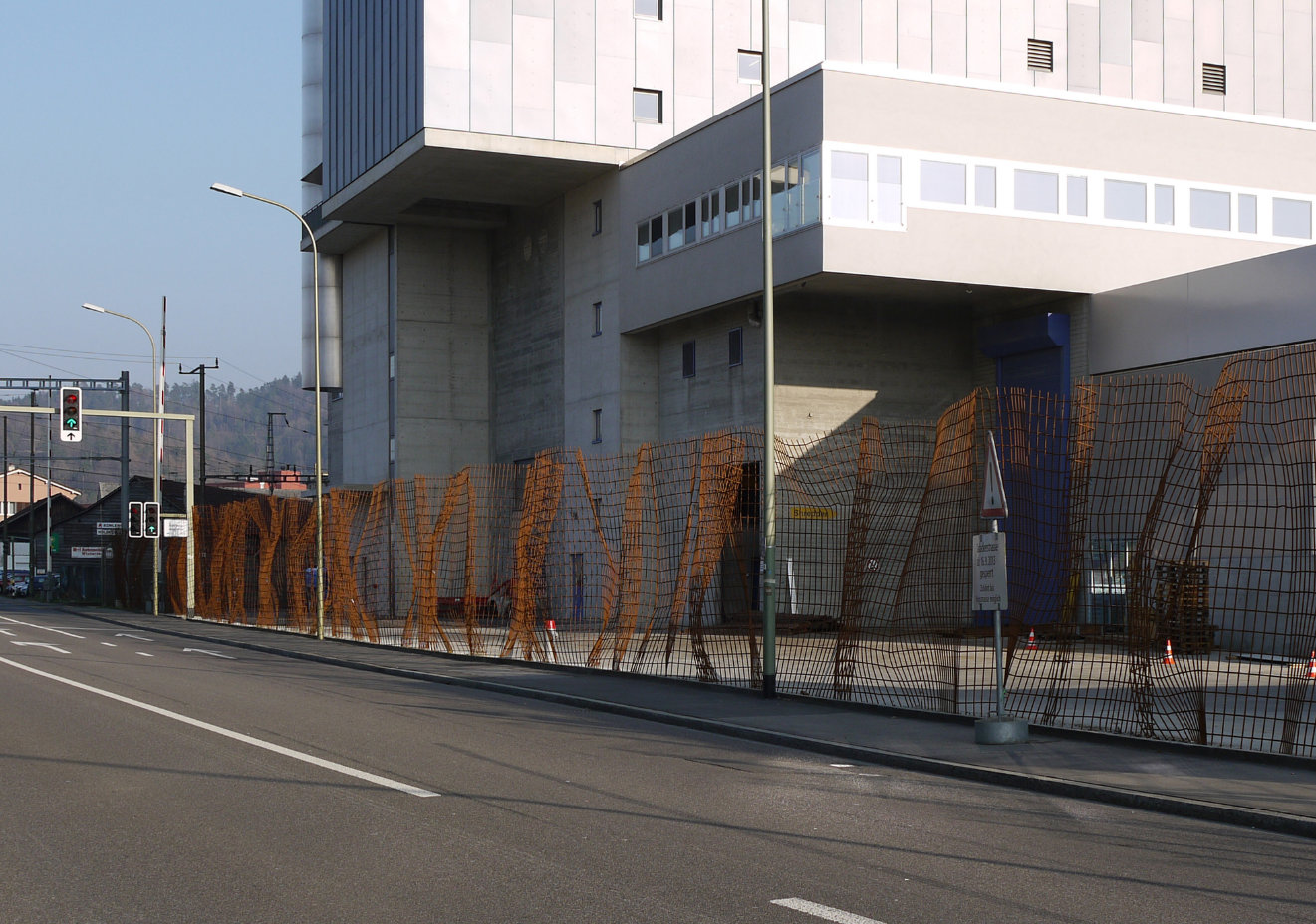
You may have seen the fence in the photos and it may look like it needs replacement. However this fence is actually new and is the winning design that was picked. It is a design by Katja Schenker called Kerberos referencing the hell fire.